Semolina Egg Noodles – Griessbandnudeln
Semolina egg noodles are not much different from your standard wide egg noodles, but the semolina flour adds a nice chewy texture that you don’t really get from regular flour. Unlike all purpose or bread flour, semolina flour is a little coarser in texture, due to the type of wheat used, and therefore makes these noodles more robust. They are one of my favorite types of noodles in a wide variety of dishes. One of my favorite winter dishes, Krautfleckerl, uses these noodles.

What makes these noodles different?
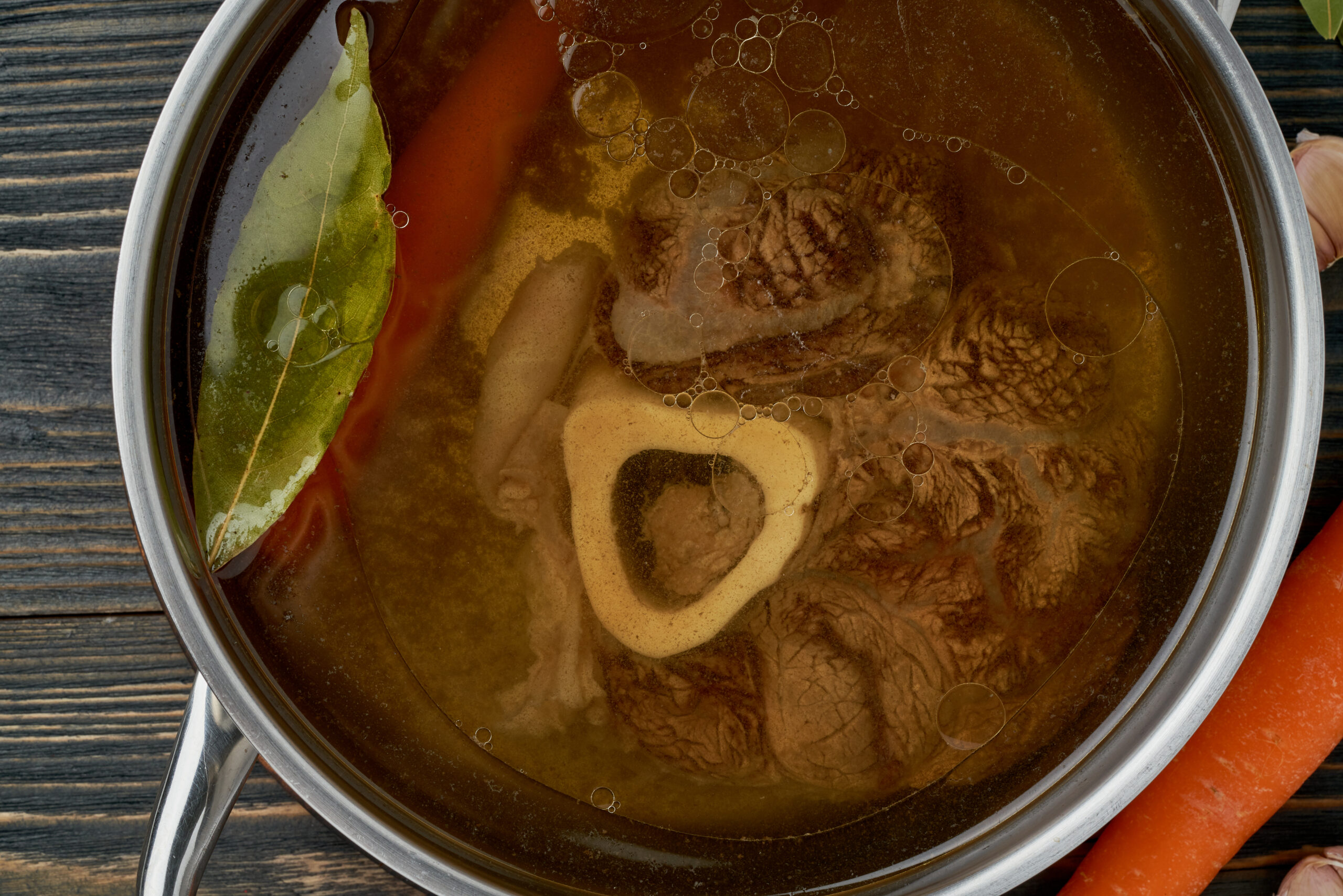
Semolina is a coarse milled flour traditionally made from durum wheat. It is yellow in color and has a higher protein and gluten count making it ideal for pasta where you want to have a little chew. I use the flour to make Grießknödel, a dish common in Germany and Austria, dumplings that are often served in a clear broth like chicken or beef. If you’re familiar with Matzo ball soup, you’ll love semolina dumplings in broth.
The chewier texture of these noodles compared to store bought wide egg noodles is what makes them so much better in my opinion.
Instructions:
- In a stand mixer fitted with the paddle attachment, combine the flour, eggs, water, and grapeseed oil and mix on low speed for 1 minute. Increase the speed to medium and mix until the dough comes together, 2 to 3 minutes. Increase the mixer speed by one setting and continue mixing until all of the ingredients are thoroughly combined and a tight dough ball forms, about 5 minutes. (If the dough feels too dry, add an additional 1 tbsp water.)
- Remove the dough from the bowl, wrap in plastic wrap, and let sit at room temperature for 1 hour. (The dough can also be wrapped and refrigerated overnight; bring to room temperature before continuing.)
- Lightly flour a work surface. Unwrap the dough and cut it into four equal portions. Place one portion on the floured work surface and roll out to ¼ in/6 mm thick. (Alternatively, following the manufacturer’s instructions, roll out the dough on a pasta machine.) Using a pizza cutter or a knife, cut the dough sheet into diamond shapes about 1 in/2.5 cm long. Transfer the diamonds to a sheet pan and dust lightly with all-purpose flour. Repeat with the remaining dough portions.
- Fill a large pot three-fourths full with water, season the water with enough salt to make it almost as salty as seawater, and bring to a boil over high heat. Drop in the noodles, stir to prevent them from sticking together, and cook until tender, 4 to 5 minutes. Drain the noodles and serve as desired, or toss with a little oil and reserve until needed.
How to use them
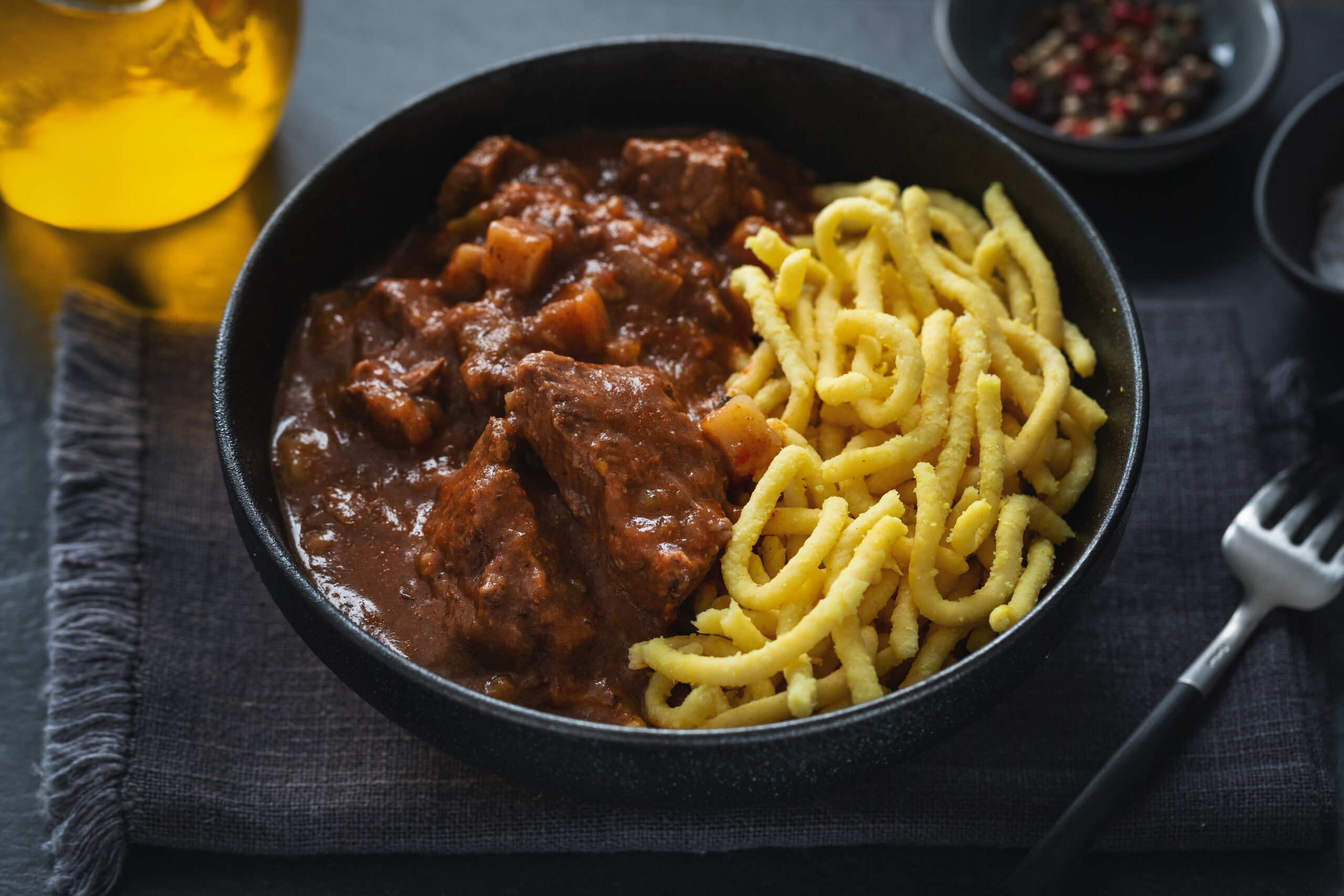
I use egg noodles in so many different ways. One of my favorites is Krautfleckerl – a cabbage and noodle dish that is perfect for weeknights in winter. I use them often in soups or as a base for a stew like our spicy Gulasch. Another great option is as a side with some melted butter and fresh herbs like dill.
Semolina Egg Noodles - Griessbandnudeln

Ingredients
- 3 cups/500 g semolina flour plus more for dusting
- 3 eggs lightly beaten
- ½ cup/120 ml water 1 tbsp grapeseed or canola oil plus more as needed if reserving the noodles
- Kosher salt
Instructions
- In a stand mixer fitted with the paddle attachment, combine the flour, eggs, water, and grapeseed oil and mix on low speed for 1 minute. Increase the speed to medium and mix until the dough comes together, 2 to 3 minutes. Increase the mixer speed by one setting and continue mixing until all of the ingredients are thoroughly combined and a tight dough ball forms, about 5 minutes. (If the dough feels too dry, add an additional 1 tbsp water.)
- Remove the dough from the bowl, wrap in plastic wrap, and let sit at room temperature for 1 hour. (The dough can also be wrapped and refrigerated overnight; bring to room temperature before continuing.)
- Lightly flour a work surface. Unwrap the dough and cut it into four equal portions. Place one portion on the floured work surface and roll out to ¼ in/6 mm thick. (Alternatively, following the manufacturer’s instructions, roll out the dough on a pasta machine.) Using a pizza cutter or a knife, cut the dough sheet into diamond shapes about 1 in/2.5 cm long. Transfer the diamonds to a sheet pan and dust lightly with all-purpose flour. Repeat with the remaining dough portions.
- Fill a large pot three-fourths full with water, season the water with enough salt to make it almost as salty as seawater, and bring to a boil over high heat. Drop in the noodles, stir to prevent them from sticking together, and cook until tender, 4 to 5 minutes. Drain the noodles and serve as desired, or toss with a little oil and reserve until needed.